

There’s always something new in the land of Google search, and the marketing world is currently abuzz with Google’s AI Overviews (previously referred to as SGE/Search Generative Experience when it was in testing). Whether this is the first you’re hearing about this feature or you’ve been following the new AI Overviews closely, we’ll unravel some common questions around the tool and what it might mean for your site’s visibility on SERPs.
What are AI Overviews?
Google has been testing, and has now rolled out, an interactive search feature that uses generative AI to provide answers to your queries directly in the SERP. These answers are called “AI Overviews.”
How do AI Overviews work?
Unlike the traditional search experience, you won’t have to click through to another website to find the information you need; AI Overviews uses AI to sift through the information Google already knows and provide your answer directly. Much like chatbots such as ChatGPT, you can then ask clarifying questions or start a conversation in the interface.
According to Google, these are the benefits of AI Overviews. People can:
- Ask new kinds of questions that are more complex and more descriptive.
- Get the gist of a topic faster, with links to relevant results to explore further
- Get started on something you need to do quickly, like writing drafts or generating imagery right from where you’re searching
- Make progress easily, by asking conversational follow-ups or trying suggested next steps
However, this interface also has a secondary effect of users being less likely to leave Google (the ‘walled garden’ effect). If the information you want is right on the search results page, you won’t necessarily have to go to a separate website.
There are, of course, potential problems and concerns with this brave new world setup—both for users seeking dependable information and for the websites that house that information, which would normally be available via organic results.
First, let’s see them in action.
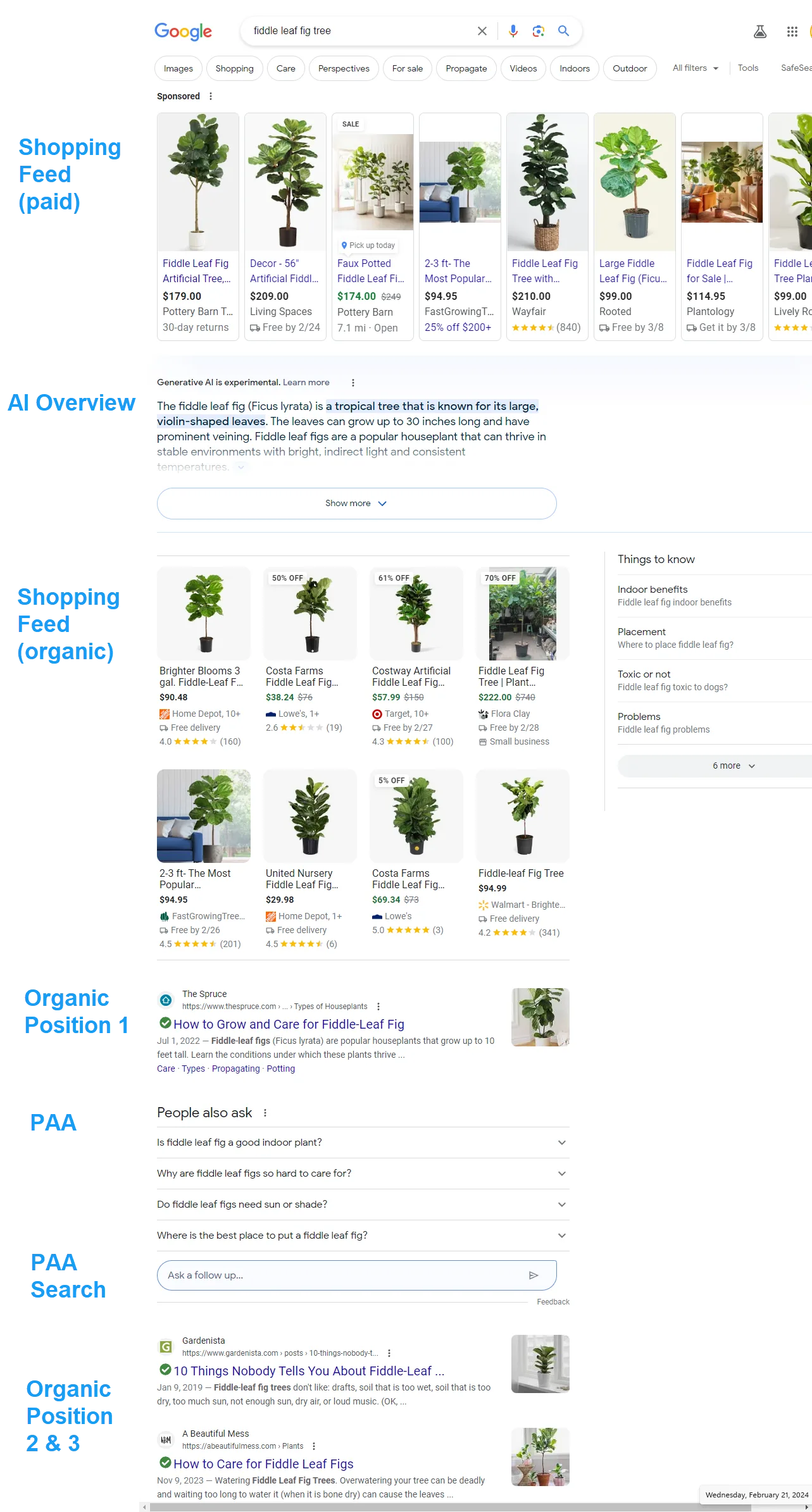
Anatomy of a Google SERP with AI Overview
How do AI Overviews impact organic and paid search?
If you’ve experienced AI Overviews, the SERP already looks different. (For those outside of the US, find out how to test it). While some ads remain at the top, organic results are pushed even further down the page, which means the number of organic results on page 1 may also be decreasing.
As a result of these changes, we expect to see the click-through rate drop for both ads and organic results. Some SEOs have estimated 30-60% drops in clicks due to these changes, but time will tell.
Organic opportunities within the AI Overview answer
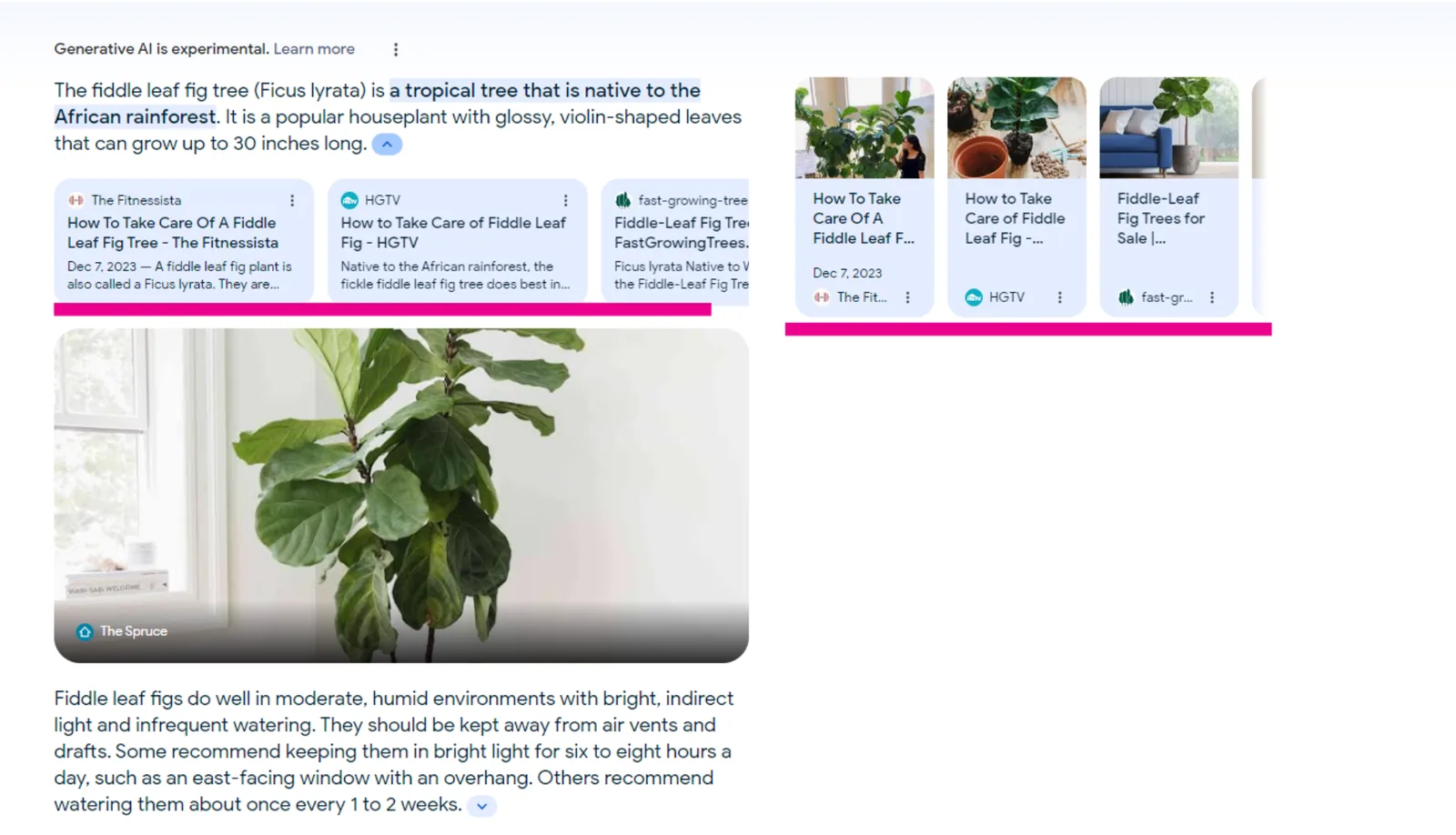
While organic results as we know them are indeed moving down the page, there are still opportunities for organic results within the AI Overview answer.
As you can see in the screenshot below, the AI Overview section provides a simple answer and corresponding links to sources that support that answer in two places. There are only a few, and this real estate is prime.
Potential concerns with AI Overviews
If you’re thinking about the ramifications, you’re not alone. We’re tracking lots of industry conversations and potential concerns from marketers:
- Organic results may be lower on the page, and fewer
- Paid ads may be moving depending on the type of query
- The content generated in the AI Overview answer may not be 100% accurate and may not provide direct sources. This makes it difficult for the consumer to verify information.
- Google may or may not cite or link to the sources where it gathered its information, which some would consider a lost click and/or lost brand recognition.
- We’re seeing Google prioritize opinion sources and discussion forums for the answers in some cases. Will people be potentially misled by strong opinions but inaccurate information without knowing it?
To follow these conversations more closely, visit Search Engine Land or Search Engine Roundtable.
How AI Overviews have been unfolding
Google started testing their AI answers (SGE) in the summer of 2023 and, after testing several aspects of the feature, launched AI Overviews to the US in May 2024. If you’re concerned about certain aspects of this feature, take heart in the fact that we’ve noticed changes to all of the following over the past few months, which indicates that Google is still settling in on details like:
- Circumstances in which AI Overviews show at all
- Where ads are showing in relation to it
- What is placed to the right of the module
- Whether the user needs to click to start the answer generation process
- Different layout styles, especially mixing many types of results in a bit of a hodge-podge
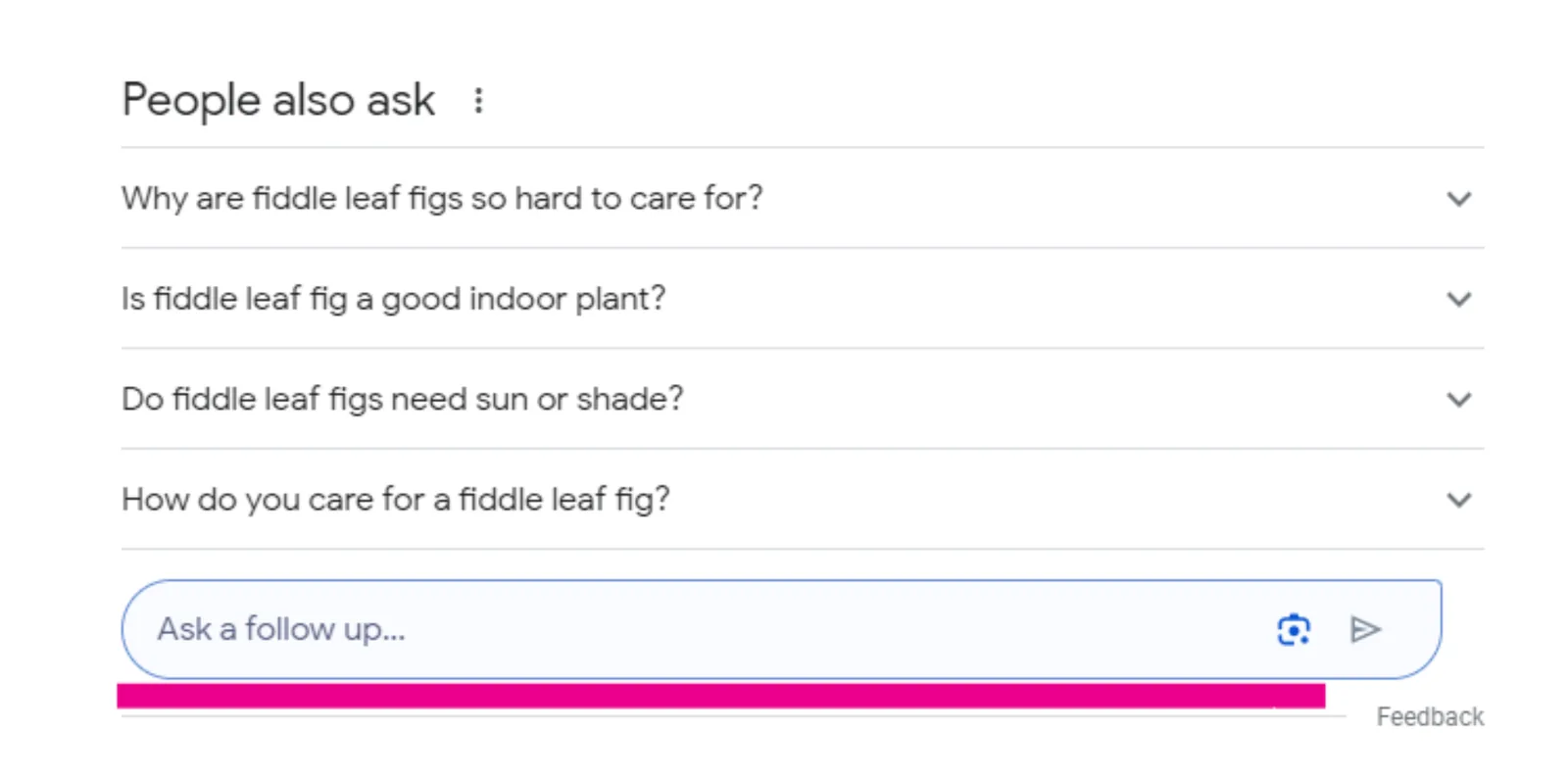
One other major change is within the ‘People Also Ask’ feature. As users scroll through the page, they are now offered the ability to ask a follow-up question to refine their search within the PAA section.
Potential opportunities with AI Overviews
Just like any shift, there are still great opportunities to seize from these changes:
- Smaller brands that produce quality content may see increased visibility. Since Google chooses the best sources that concisely describe or explain a topic in plain language, precisely targeted content will win. As Tim Cameron-Kitchen from Exposure Ninjas says, “Google seems to favor exact match [blogs] over high-authority but more generic information. This may change.”
- Links shown in the AI Overview answer are being shown several times. Looking back on the Fiddle Leaf Fig query, one result from a site called “Fitnessista” shows three times on the SERP, twice in the AI Overview area, and once in the organic listings below.
Is this definitely happening?
Google is spending a lot of time, money, and effort in the AI space right now—having been caught on their back foot by Bing—and we believe we will see a wider rollout of AI Overviews to more markets over the next year.
While some users may not like the feature, Google has indicated it’s here to stay. We believe it’s best to take full advantage of AI Overviews in order to gain visibility over competitors.
I don't see AI Overviews when I search. How can I test it for myself?
If you’re within the US and haven’t experienced AI Overviews in your search results, try searching with queries that are specific but easily answered using undisputed information. Try “Who fought in WW2” or “What is motor oil?”
For those outside of the US, you can sign up to see AI Overviews on your Google results page in just a few seconds.
You must be logged into a personal Gmail account in one of these countries for access (a Gmail account tied to Google Workspace will unfortunately not work). If you’re in Europe, you can circumvent this by using a VPN. Here are the instructions for getting access to Google SGE.
What should we do to optimize for AI Overviews?
First, don’t be too alarmed. Our SEO experts at Intrepid all agree on this way of looking at it: we’ve seen dozens of changes to SERPs over the years, and while marketers and SEOs do need to pivot and continually optimize over time, we work together to ride the waves and continue showing up for customers.
Now, if your goal is to have your content and site show in the AI-generated answer, it will be a content play. You will need to focus on
- high-quality, targeted content that Google can easily parse and pull into the AI result.
- Use proper heading structures to show the outline of the page
- Provide content summaries at the top in a concise manner that touches on the major points of the topic.
- Also, make sure you’re experimenting with AI Overviews yourself to see what Google is surfacing for the keywords you are targeting. If you can answer those questions accurately and succinctly on your site, you may be a prime candidate for the SGE result.
We also suggest continually checking on the AI-generated answers in your industry to ensure that your content matches what Google is looking for—which will typically be helpful and unique content that answers the user’s query.
Don’t worry—you don’t need to be constantly tweaking your pages every day. Instead, search your top keywords on a weekly basis to check AI Overview results and the SERP layout du jour.
Industries that may be affected most
Wondering how your industry will fare in the wake of AI Overviews?
Per Search Engine Land, according to their trials, there are five industries impacted. These industries are seeing the highest rate of generated answers on AI Overviews, whether in a collapsed state or opt-in state:
- Healthcare
- eCommerce
- B2B tech
- Insurance
- Education
Other industries seeing a “medium” level of AI-generated answers, usually as opt-in answers, are restaurants, travel, and entertainment.
We have proprietary information on our site that we don’t want showing up in the AI Overview answer. Should we block our site from this?
That’s a great question that deserved its own page. See our supplemental blog post about this question here.
Have questions about AI Overviews? Reach out to your Intrepid contact or via Contact Us. We’d love to hear from you!